Product Design
PROJECT OVERVIEW
Abstract
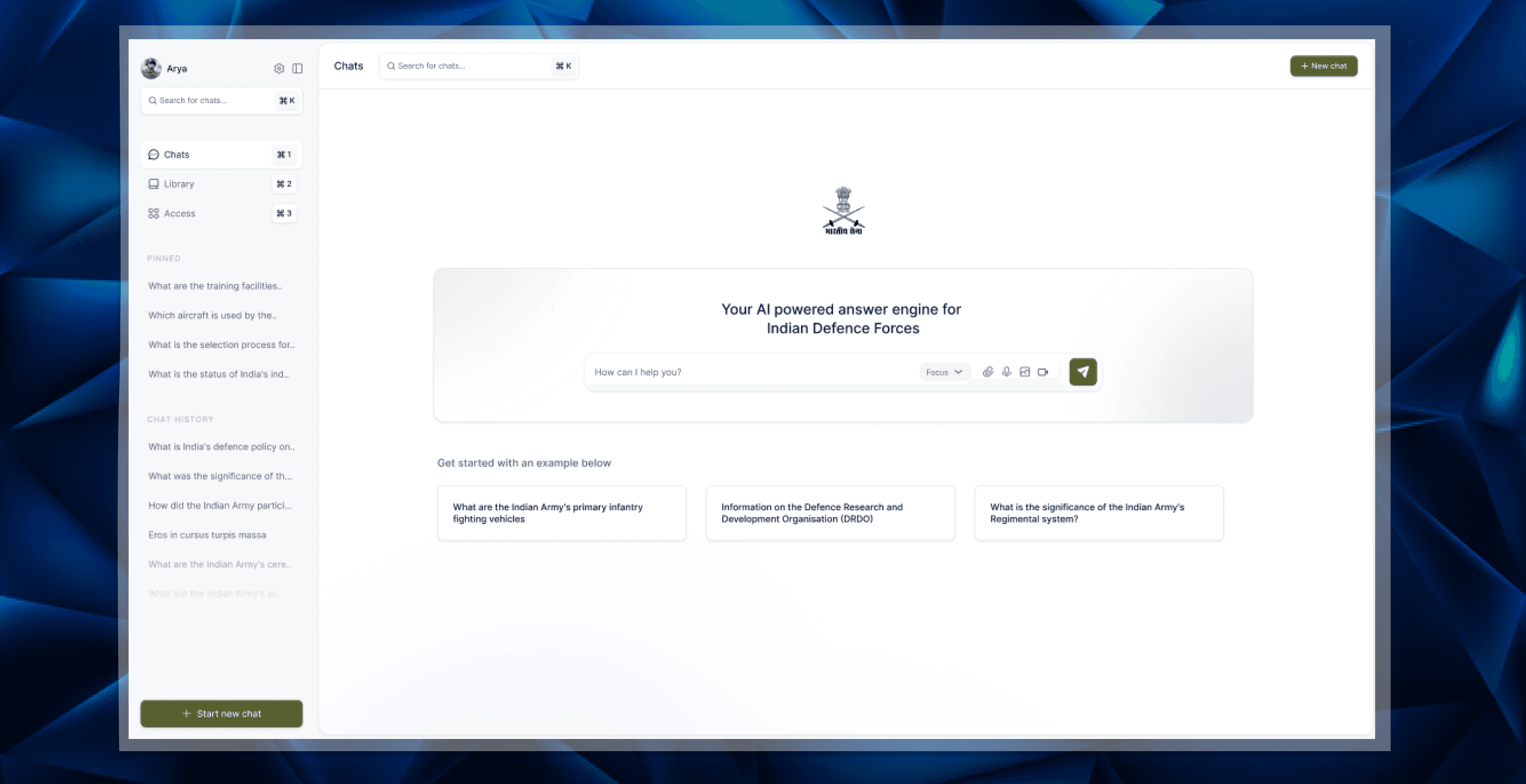
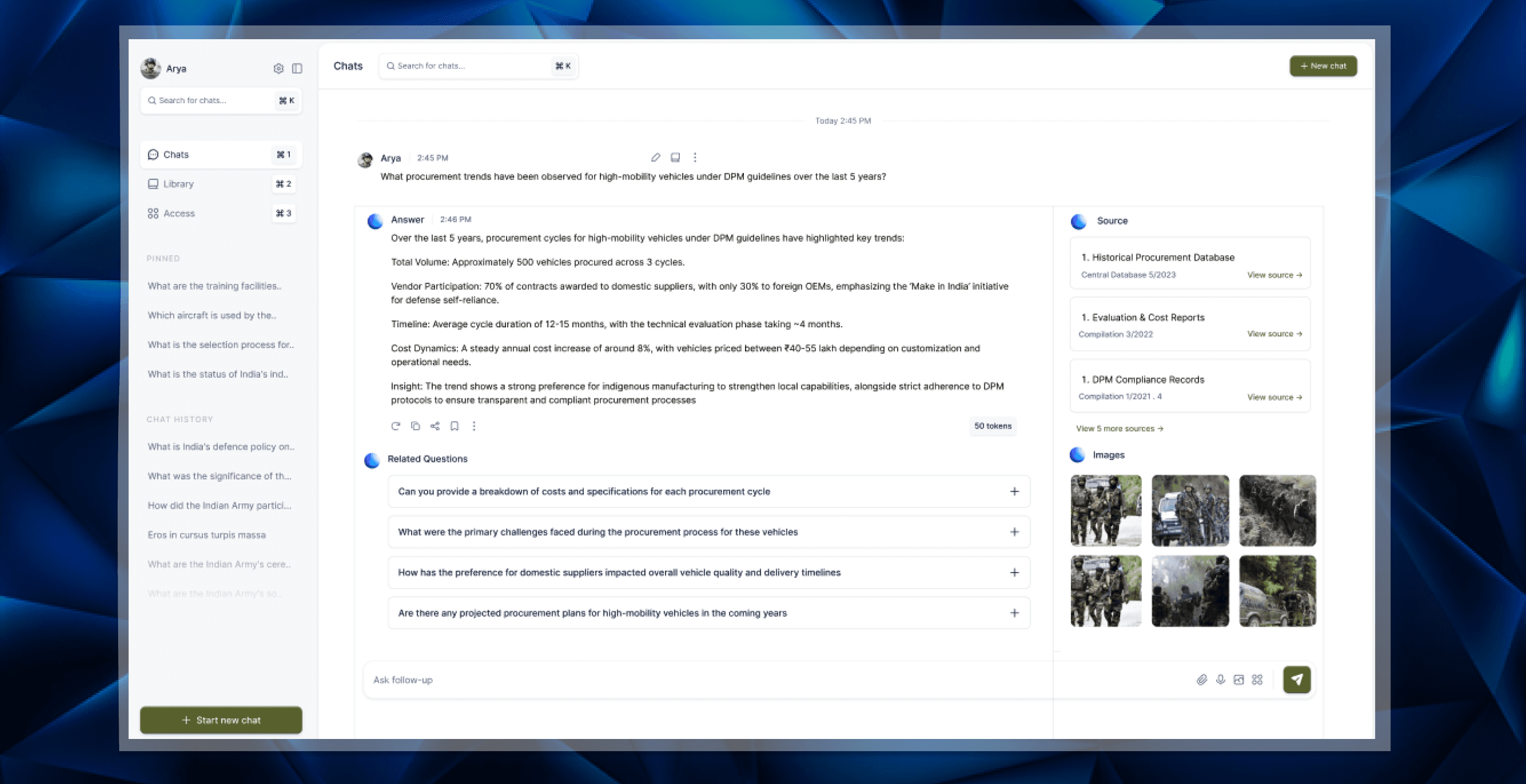
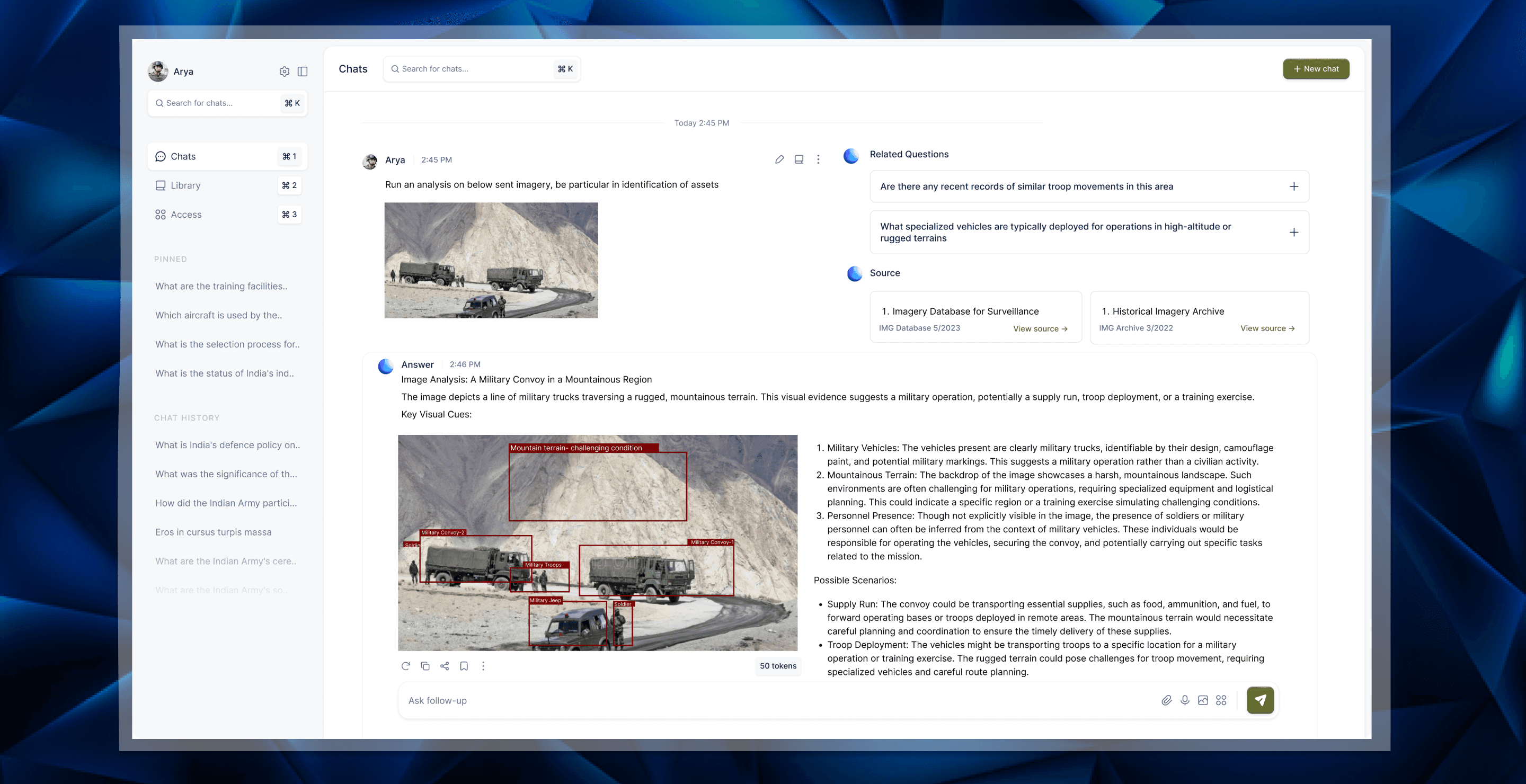
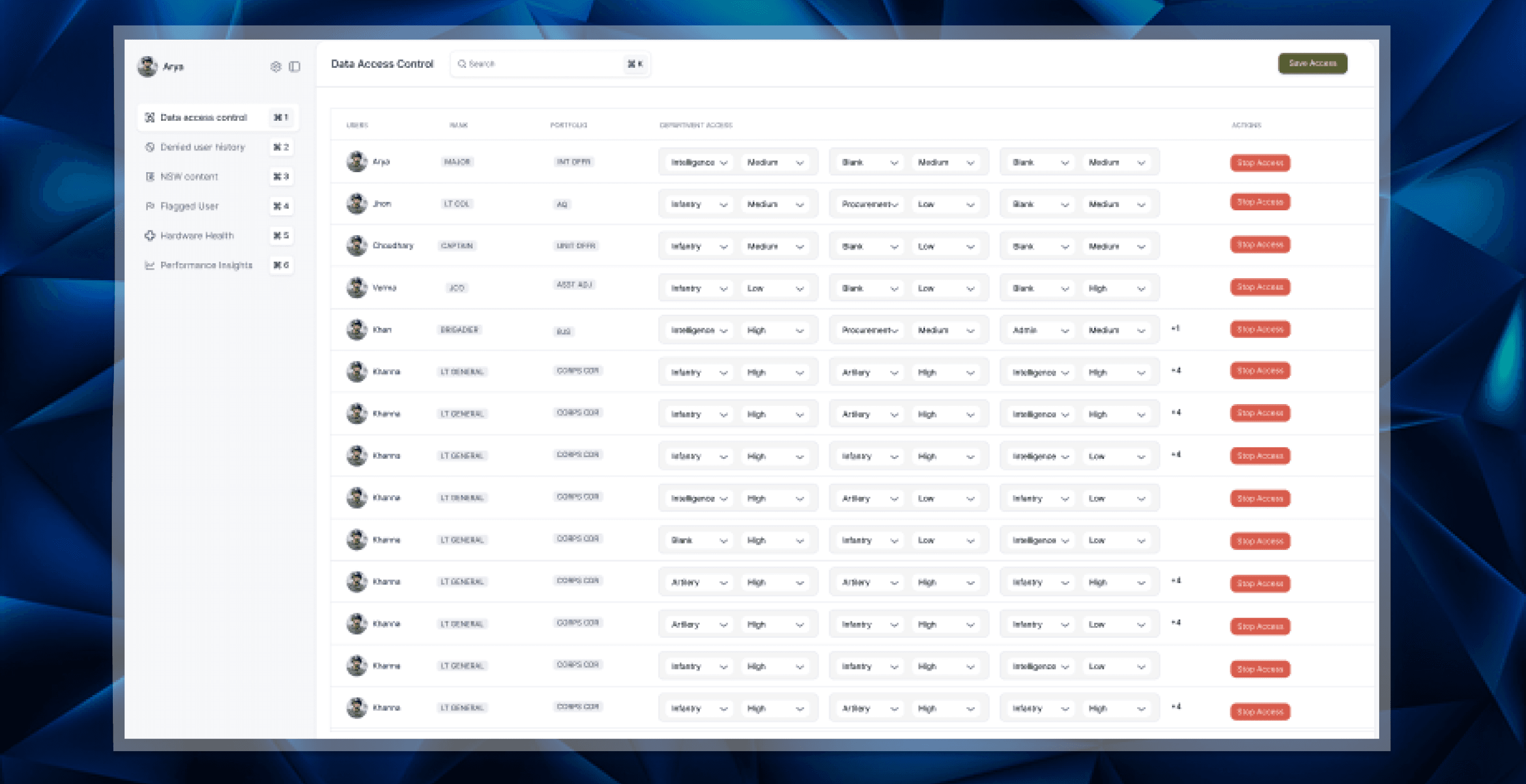
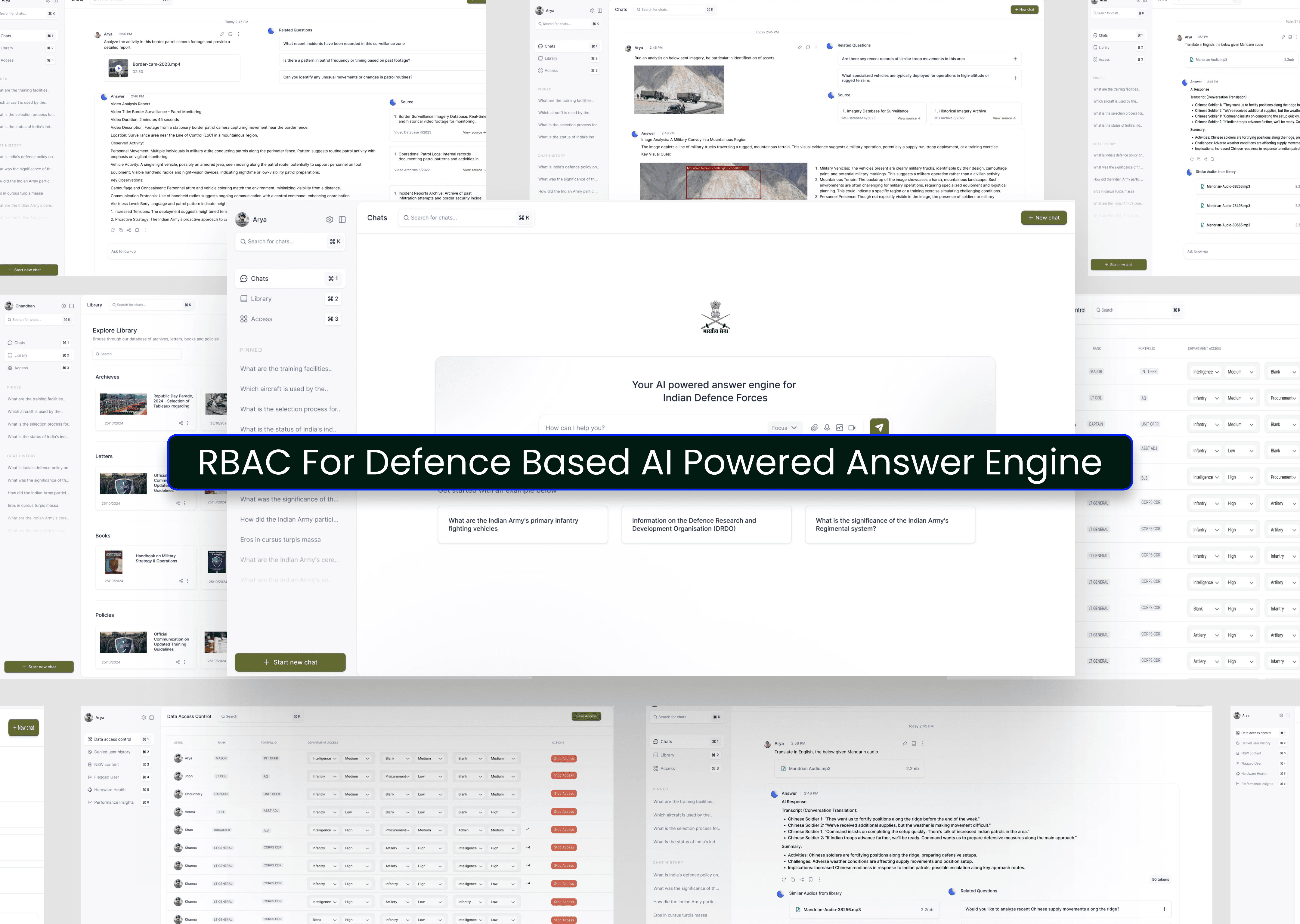
This case study presents the design and development of a secure conversational search engine tailored for the Indian defence sector. This system utilizes large language models (LLMs) to provide precise, contextually relevant answers based solely on information from a restricted, secure database. Key features include citation-based responses, advanced access controls for information hierarchy, and a specialized ranking mechanism for managing sensitive data visibility according to the official rank. By ensuring data security, ease of access, and user-centric design, this tool addresses critical challenges in managing classified and semi-classified military information.
Problem Identified
Military operations require precise and timely access to data. However, the inherent risks of exposing sensitive information necessitate a platform that balances usability with stringent security requirements. Specific challenges include: 1. Lack of Secure Conversational Interfaces: Existing AI systems like Perplexity are unfit for defence applications due to their reliance on open web data. 2. Data Access Hierarchy: No effective mechanism exists for hierarchical control of data access based on ranks or roles within the defence ecosystem. 3. Citation Accuracy: Defence personnel require trustworthy responses citing exact locations in the secure database.
Our Solution
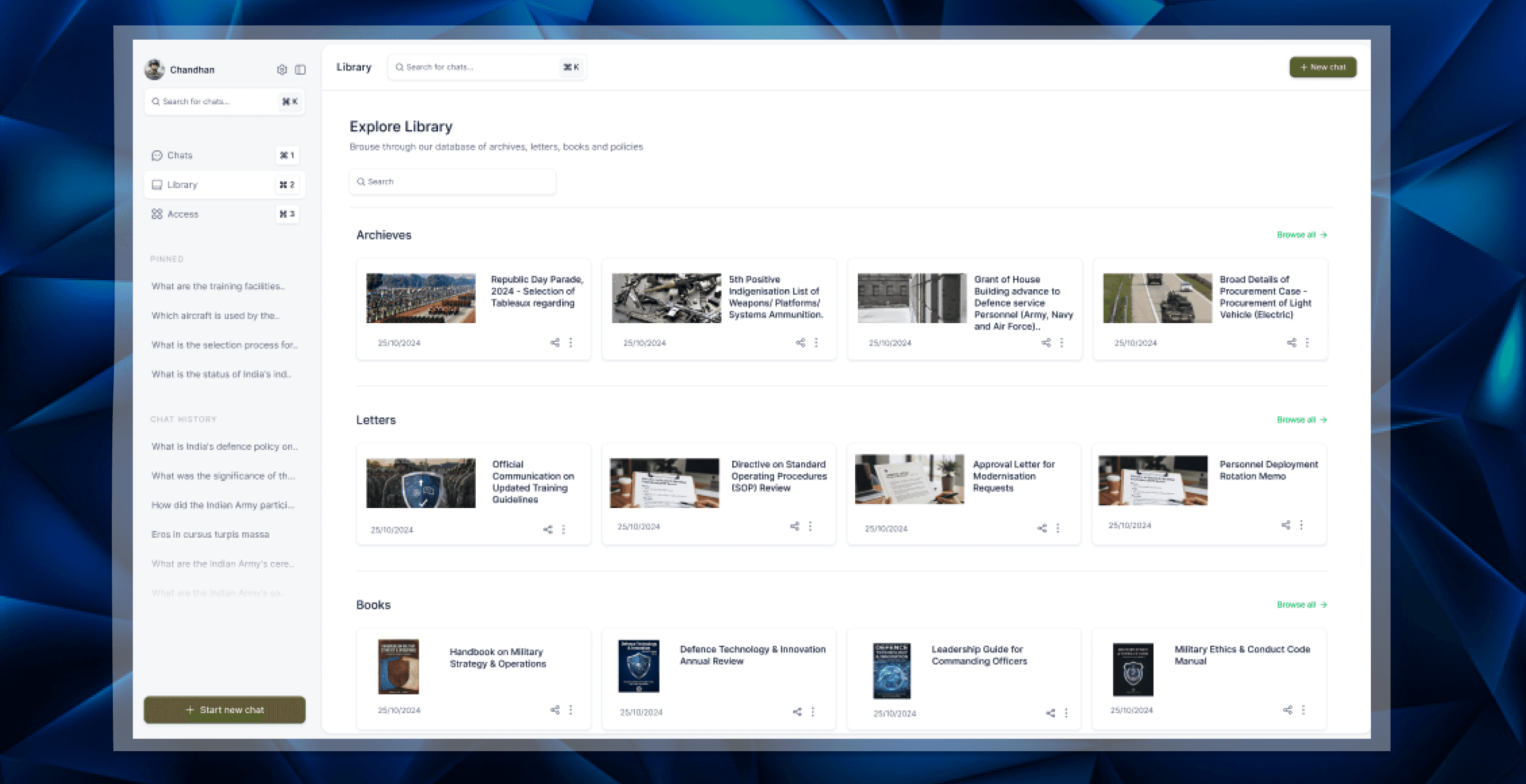
The proposed solution follows a modular architecture comprising: 1. Data Repository Module: A structured, indexed database containing classified documents categorized by confidentiality level. a. Data Ingestion Pipeline: Automates document ingestion with metadata tagging for sensitivity and keywords. b.Encryption Standards: Ensures compliance with national defence encryption protocols. 2. Conversational Search Engine Core: Powered by fine-tuned LLMs designed to perform extractive and abstractive reasoning over the secure dataset. a. LLM Fine-Tuning: Customized on a dataset with classified language patterns to improve accuracy and understanding of military terminology. 3. Access Management Layer:Role-based access control (RBAC) integrated into the system, leveraging organizational hierarchy. 4. Citing Mechanism:Dynamic generation of inline citations with hyperlinks to corresponding data sections. 5. Security Framework a. Multi-Factor Authentication (MFA): Ensures user authentication before access. b. Rank-Based Authorization: Access is dynamically restricted to documents classified below the user’s security clearance.