PROJECT OVERVIEW
Abstract
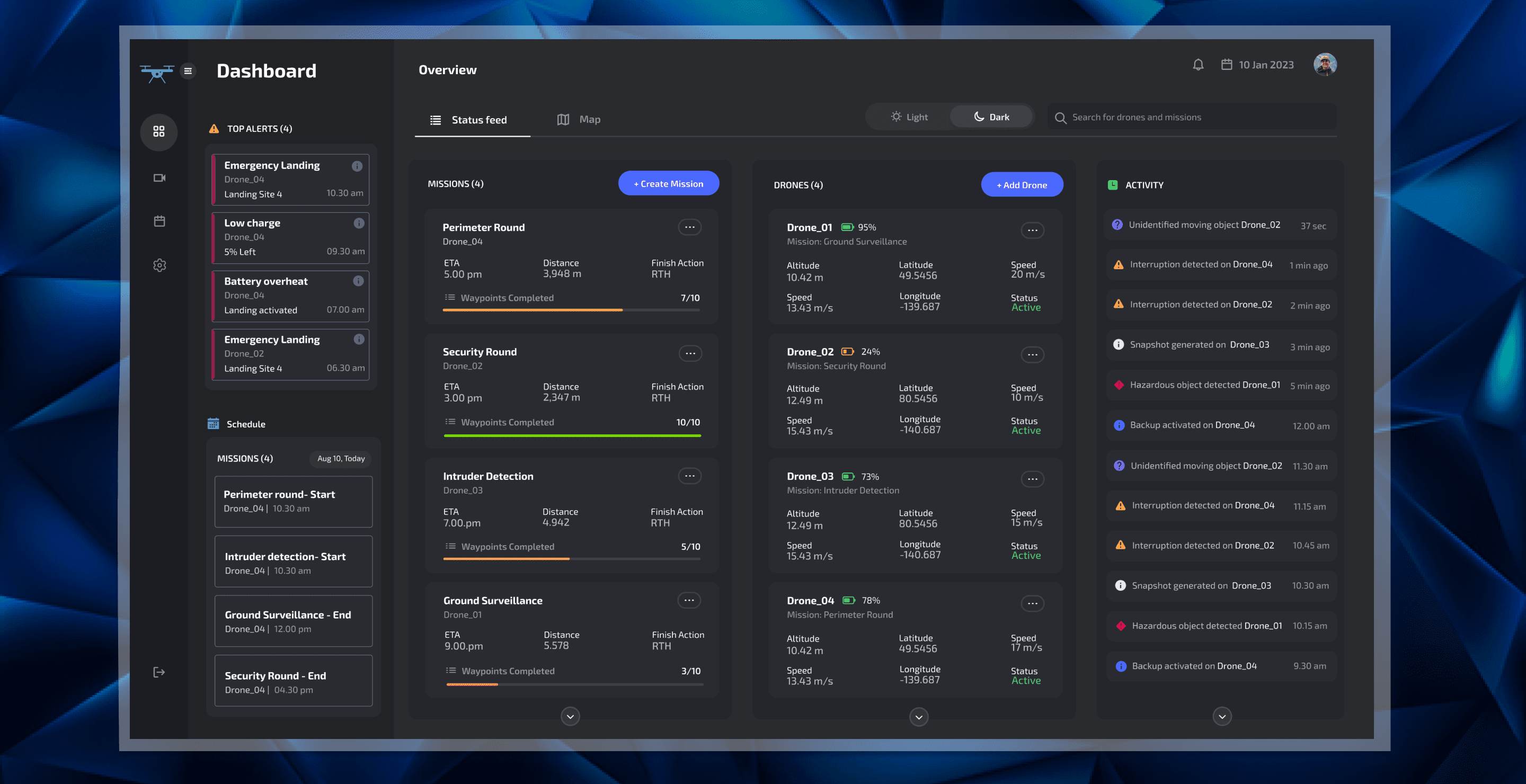
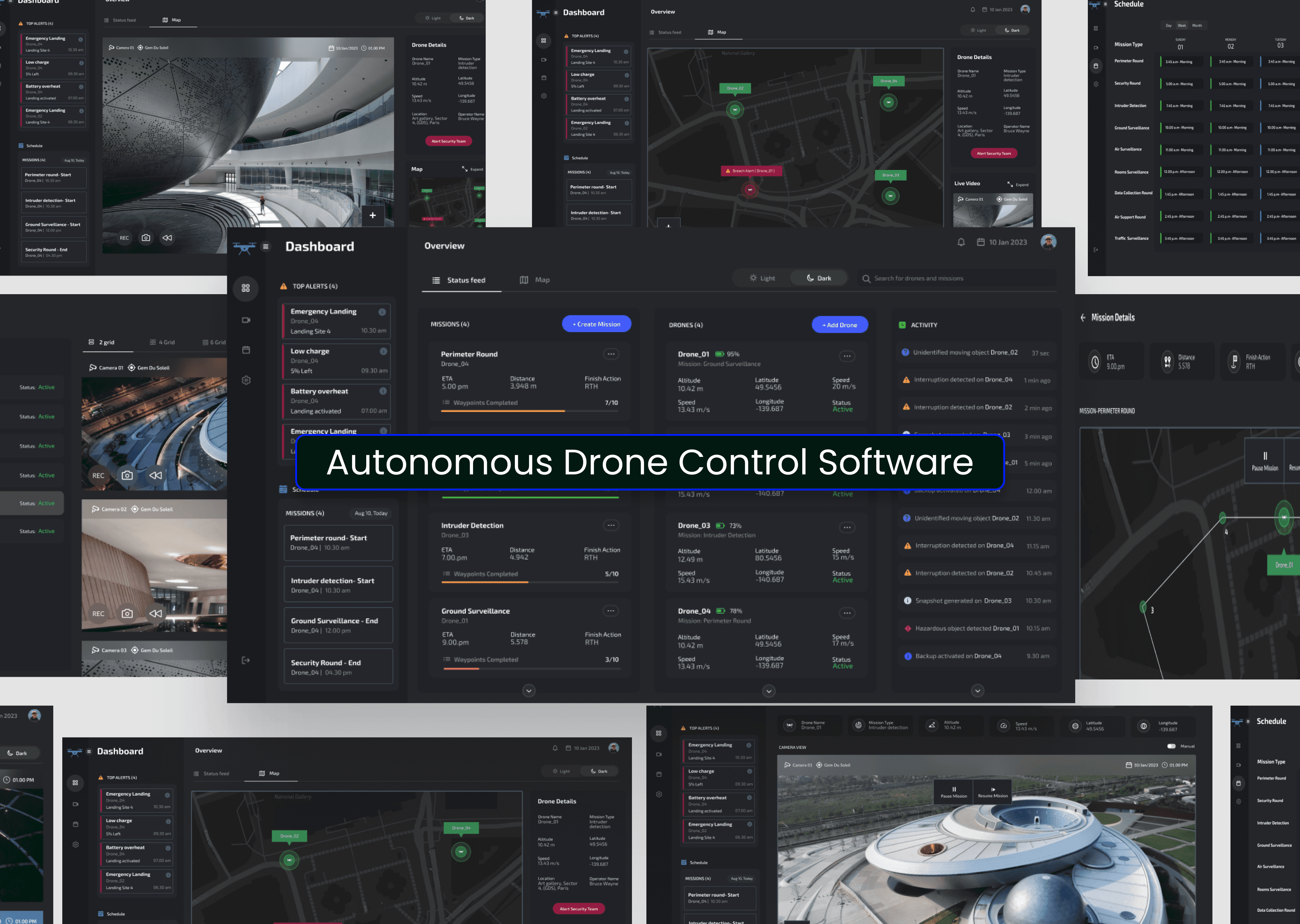
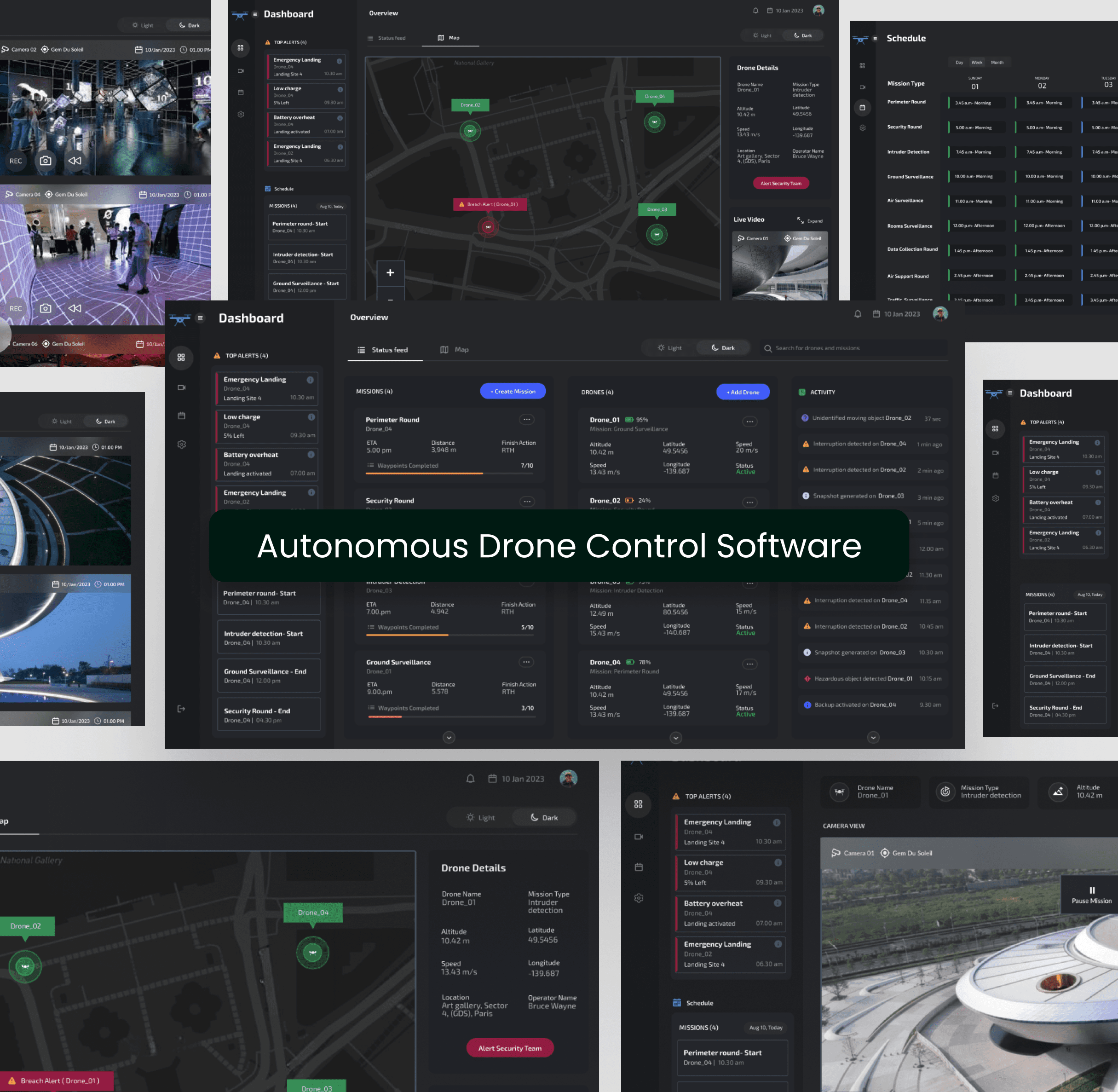
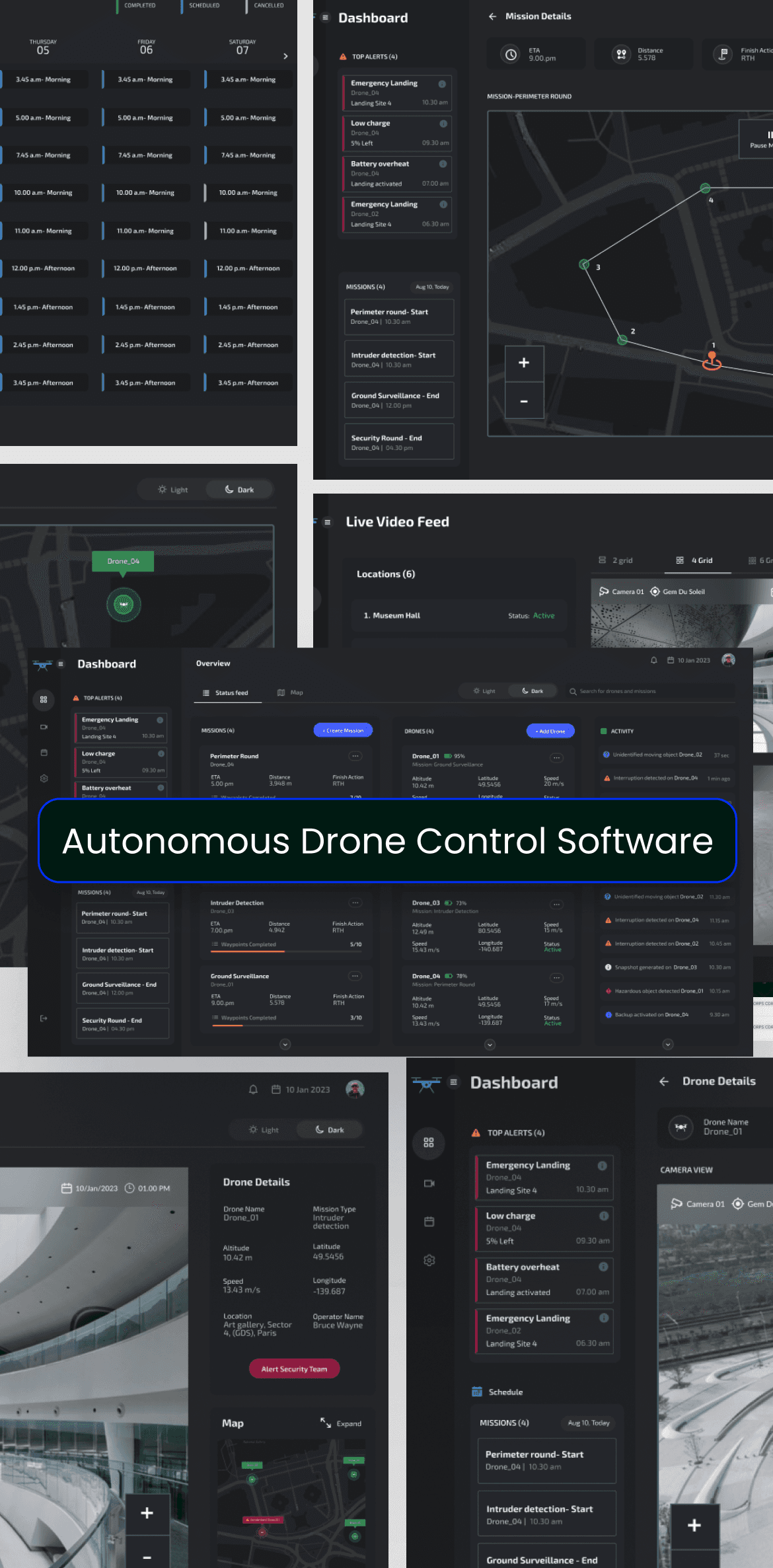
This case study presents the design and evaluation of an autonomous drone operations software platform that enables centralized control, monitoring, and automation of multiple unmanned aerial vehicles (UAVs). The system allows operators to create and pre-schedule autonomous missions, monitor live and recorded drone feeds, receive real-time alerts, manually intervene when required, and manage mission schedules and captured media assets.
The core design challenge addressed by this platform is balancing high autonomy with operator oversight, ensuring safety, reliability, and operational efficiency across diverse mission scenarios. By integrating autonomous mission planning, real-time telemetry visualization, alert management, and manual flight control within a unified interface, the product significantly reduces operator workload while improving mission execution accuracy. This paper outlines the problems identified during discovery, the high-level system architecture, and the results obtained from testing and evaluation.
Problem Identified
Through stakeholder interviews, domain research, and analysis of existing drone operation workflows, several key problems were identified:
Disconnected Drone Operations: Drone control, mission planning, alerts, and media review existed in separate tools. Operators had to constantly switch contexts, increasing cognitive load and slowing down operations.
Limited Visibility into Autonomous Missions: While drones could fly autonomously, operators lacked clear, real-time visibility into mission status, health, and progress — reducing trust in autonomous execution.
Repetitive Mission Setup: Common missions had to be recreated from scratch each time, leading to inefficiencies and a higher risk of configuration errors.
Ineffective Alert Handling: Critical alerts were not clearly prioritized, making it difficult for operators to quickly identify and respond to high-risk situations.
Unstructured Media Access: Images, videos, and flight data were difficult to locate and review due to the absence of mission-based organization.
Developed Solution
The system was designed as a modular platform to support autonomous missions, real-time monitoring, and manual control while remaining scalable for multi-drone operations.
1. Drone Communication Layer: Handles secure, low-latency communication with drones to:
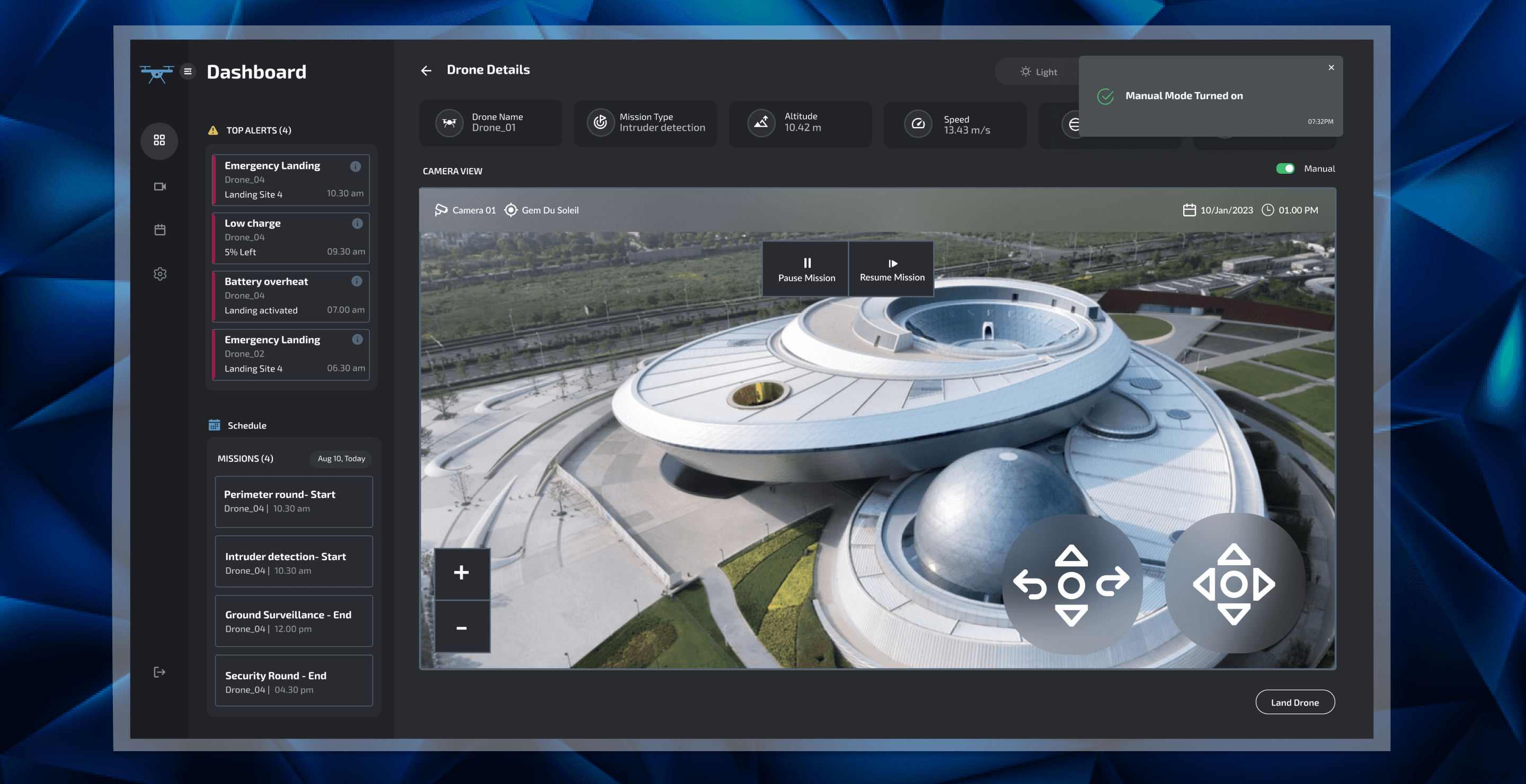
Send flight commands (autonomous and manual)
Receive real-time telemetry (location, altitude, battery)
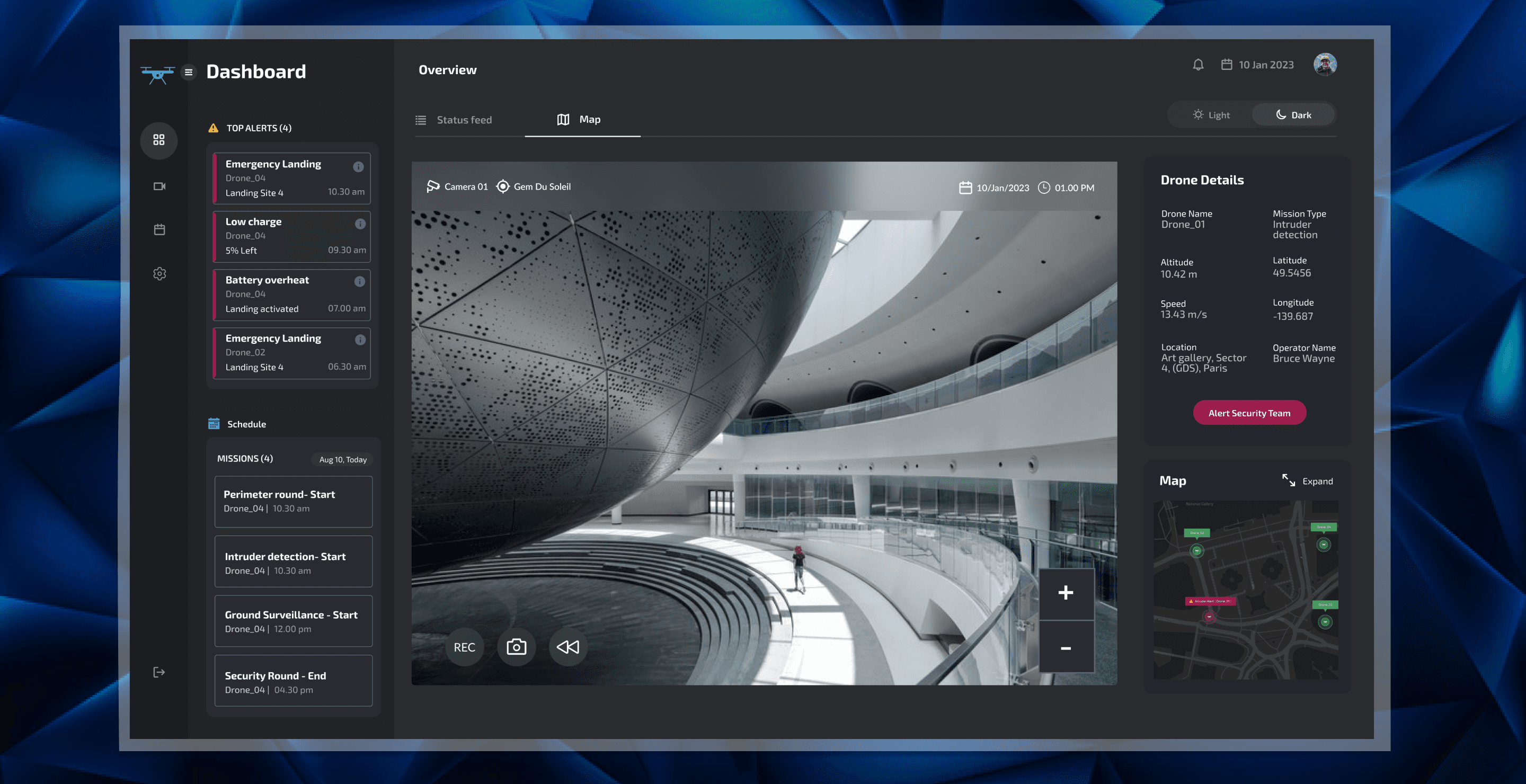
Stream live video feeds
Fail-safe mechanisms ensure safe drone behavior during signal loss or critical failures.
2. Mission Management Layer: Enables operators to:
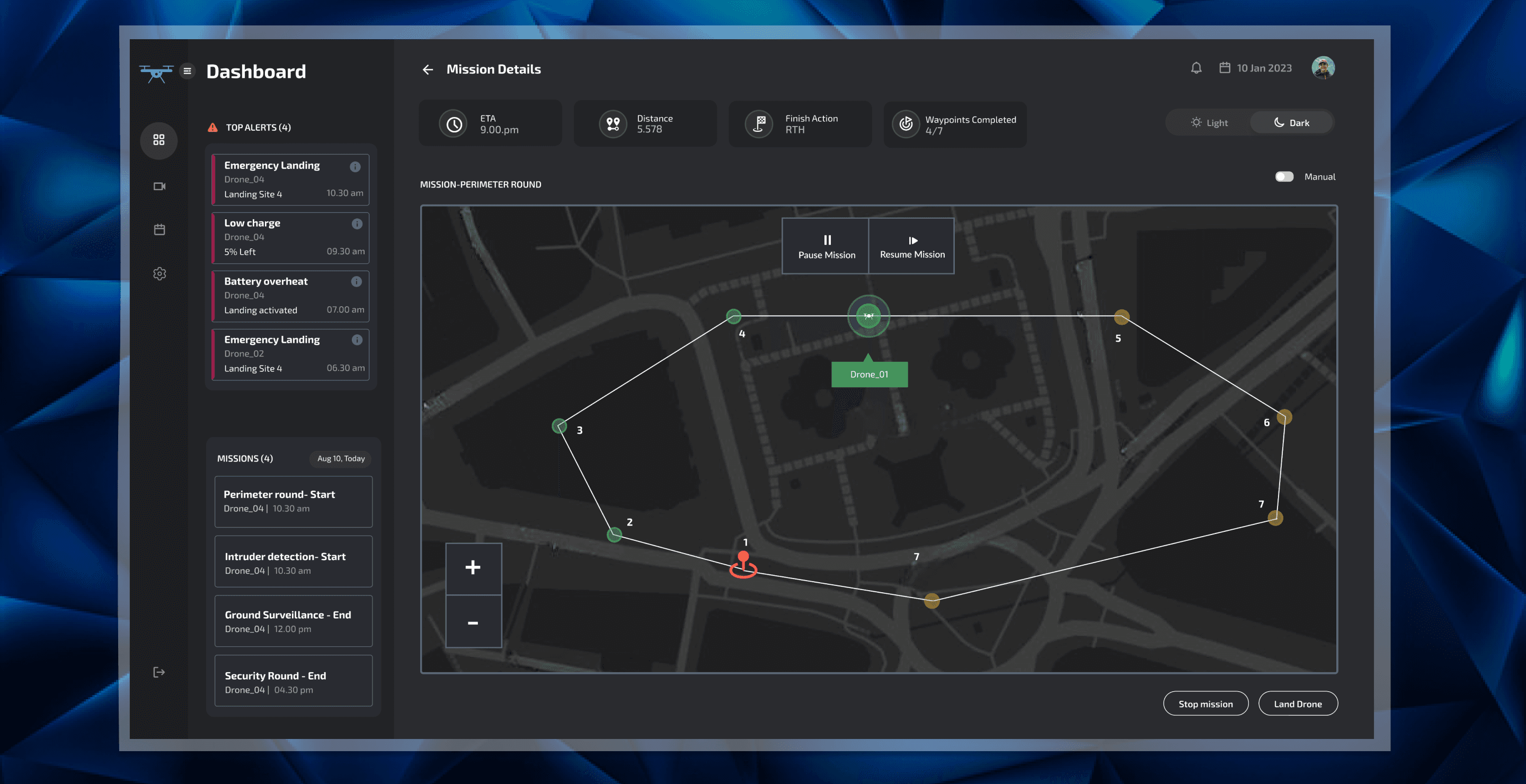
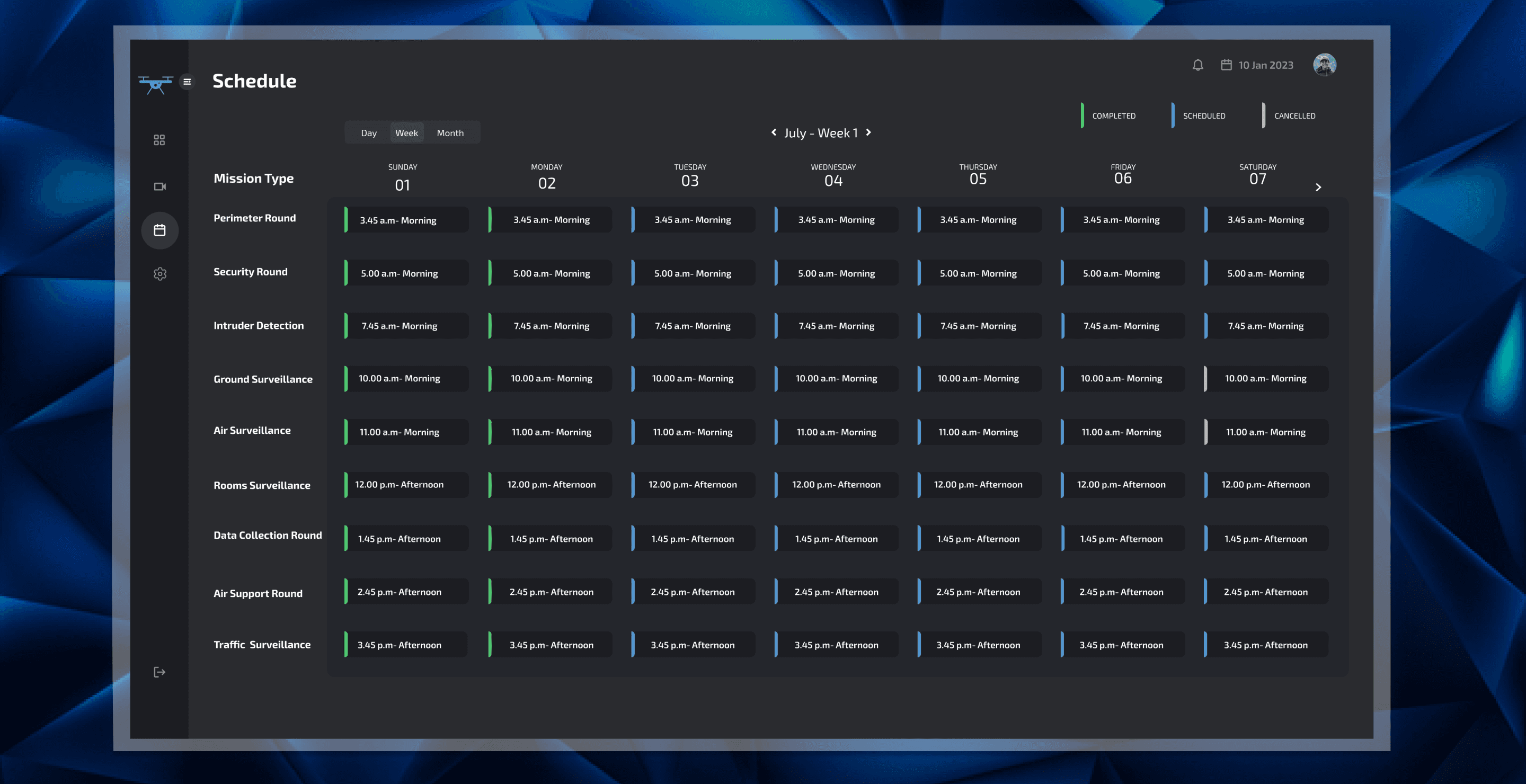
Create and pre-schedule autonomous missions
Reuse mission templates
Track mission execution in real time
This layer manages mission state, timing, and basic constraint checks.
3. Control & Monitoring Layer: Provides a unified operator interface for:
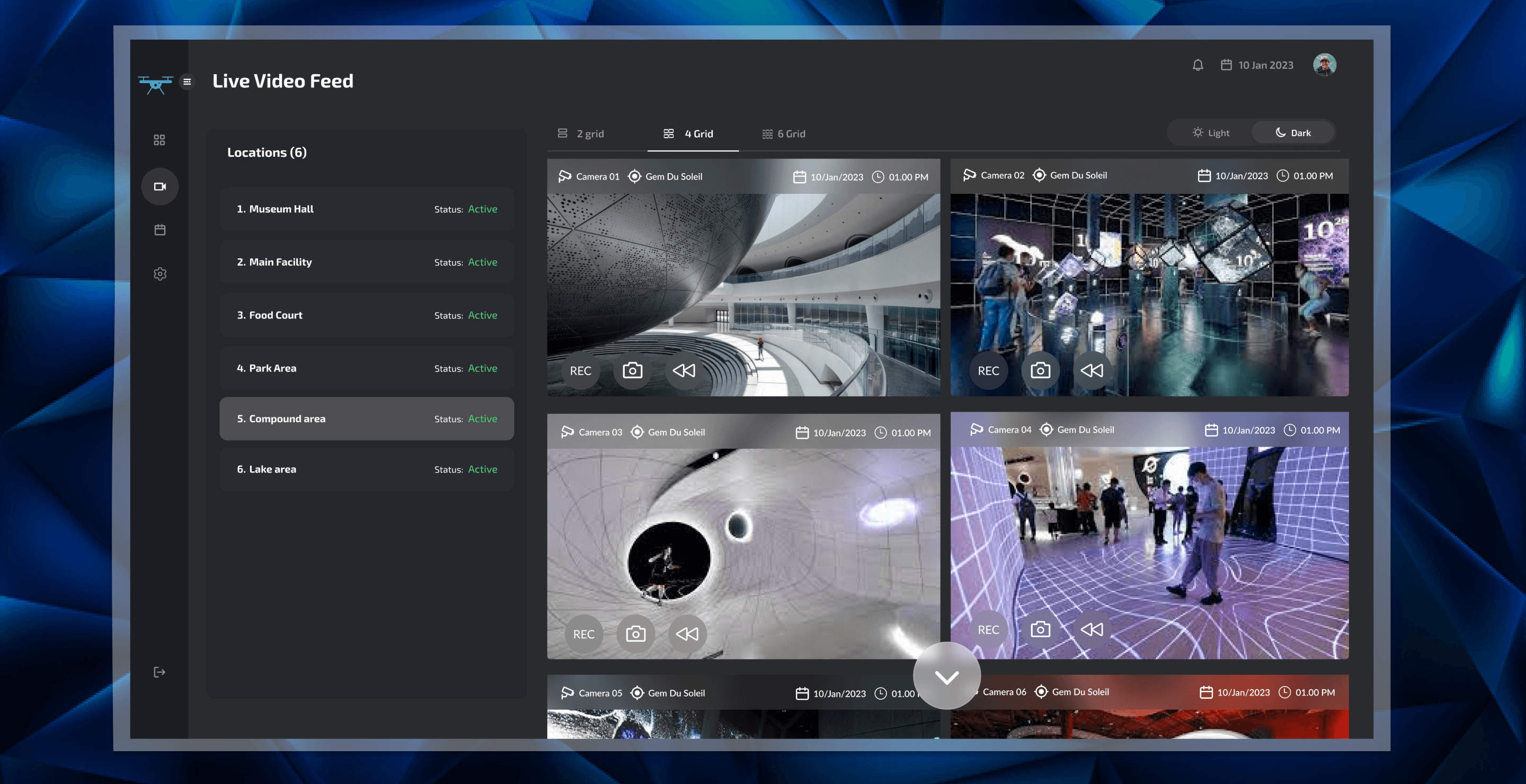
Live map-based drone tracking
Switching between autonomous and manual flight
Viewing alerts and mission status
Designed to prioritize situational awareness and fast intervention.
4. Data & Media Layer: Stores and organizes:
Flight logs and telemetry
Captured images and videos
Mission schedules and history
All data is automatically tagged with mission context and timestamps for easy retrieval.
Results and Evaluation
Prototype: The first version of the platform was evaluated through simulated autonomous missions and manual flight scenarios.
Key Outcomes
Mission setup time reduced by ~60% through reusable missions and scheduling
Operators successfully monitored and managed multiple drones from a single interface
Autonomous missions executed reliably with clear real-time visibility
Manual override worked instantly without interrupting ongoing missions
Prioritized alerts improved response to critical flight events
Operational Impact
Reduced cognitive load for operators
Increased confidence in autonomous drone behavior
Faster post-mission review due to structured media organization
Overall, the V1 release validated that a unified platform can effectively balance drone autonomy with human control, providing a strong foundation for future capabilities.